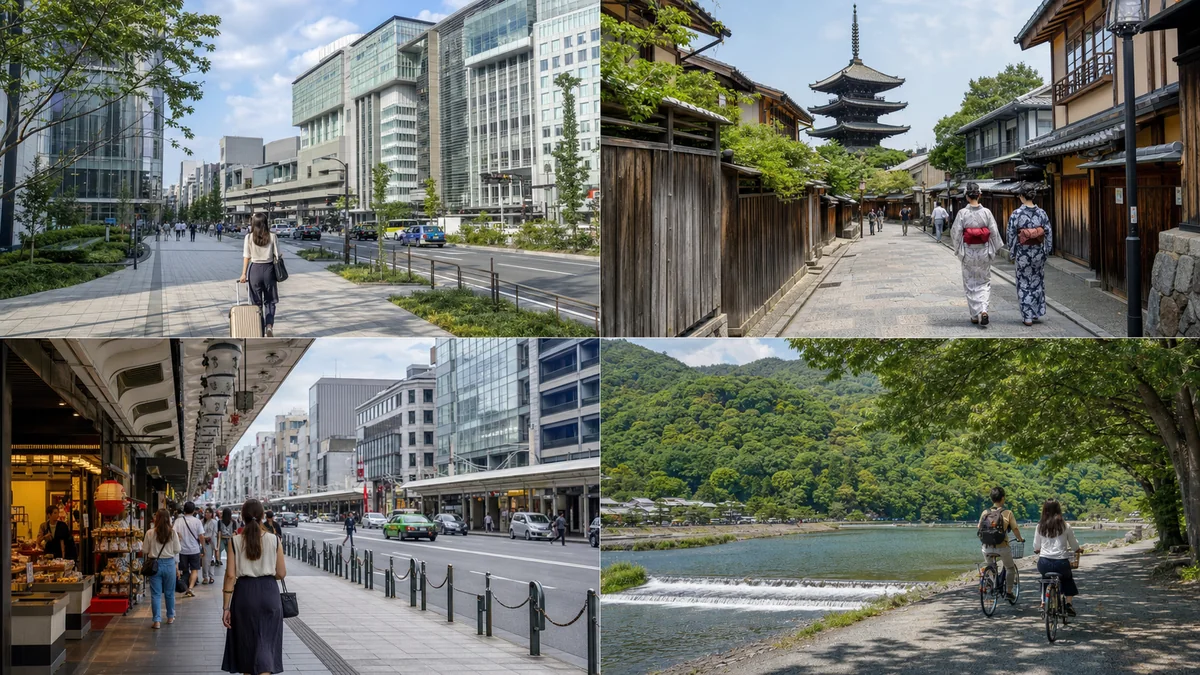
Disclosure: This article contains affiliate links. If you book through these links, we may earn a small commission at no extra cost to you. This does not affect our recommendations.
Choosing your base for two Kyoto days? Pair this area guide with Kyoto 2-Day Itinerary for First-Timers to see how Downtown, Gion and Kyoto Station change the route.
Landing at Kansai Airport and going straight to Kyoto? Use this arrival plan before you lock in your area: First Day in Kyoto: Kansai Airport to Your Hotel.
Quick answer: For your first trip to Kyoto, stay in Downtown Kyoto (the Kawaramachi–Karasuma area). You’ll be walking distance from restaurants, Nishiki Market, and the Gion evening atmosphere, with subway and private-rail lines for everything else.
If your itinerary is built around day trips (Nara, Osaka, Fushimi Inari), Kyoto Station is the more practical base.
Here’s how to decide, area by area.
The 30-second version
- Most first-timers → Downtown (Kawaramachi–Karasuma). Your evenings happen on foot.
- Nara, Osaka or Fushimi Inari day trips → Kyoto Station. Every useful line starts there.
- One atmospheric night → Gion or Higashiyama. Expensive, small rooms, worth it once.
- Budget for the city tax. Kyoto’s accommodation tax changed on 1 March 2026 and now runs from ¥200 to ¥10,000 per person per night, charged at the property.
- Do not plan your days around city buses. The bus-only day pass was abolished in March 2024.
- How to Choose: Sightseeing City, Spread-Out Sights
- Downtown Kyoto (Kawaramachi–Karasuma): Best for Most First-Time Visitors
- Kyoto Station Area: Best for Day-Trippers and Rail Travelers
- Gion & Higashiyama: Best for Atmosphere (at a Price)
- Arashiyama: Quiet and Scenic, but a Commitment
- Areas to Think Twice About
- Quick Comparison Table
- What It Costs to Get Around From Each Base
- The Kyoto Accommodation Tax, and Why Your Bill Is Higher Than Your Booking
- Osaka Base vs Kyoto Base?
- What Is Actually Worth Booking Before You Arrive
- Final Recommendation
- Kyoto Accommodation FAQ
How to Choose: Sightseeing City, Spread-Out Sights
Kyoto’s famous sights are scattered around the edges of the city — Kinkakuji in the northwest, Arashiyama in the west, Fushimi Inari in the south, Kiyomizudera and Gion in the east. No hotel is close to everything. So choose your base by evenings, not by sights:
- Want restaurants and life outside your door every night → Downtown (Kawaramachi–Karasuma)
- Doing day trips to Nara or Osaka, or arriving by Shinkansen → Kyoto Station
- Want the traditional atmosphere (and will pay for it) → Gion / Higashiyama
- Want quiet and scenery over convenience → Arashiyama
Downtown Kyoto (Kawaramachi–Karasuma): Best for Most First-Time Visitors
Why Downtown Works
This is the only part of Kyoto that stays properly alive in the evening. Restaurants along Kiyamachi and Pontocho alley, Nishiki Market, department stores, and hundreds of hotels — all walkable.
- Walk to Gion in 10–15 minutes across the Kamo River for the evening lantern atmosphere
- Hankyu line at Kyoto-Kawaramachi for direct trains toward Osaka (Umeda)
- Karasuma subway line connects to Kyoto Station in about 5 minutes
Pros and cons
- ✅ Best restaurant choice in the city, from casual to kaiseki
- ✅ Evening walks: Pontocho, Kiyamachi, the Kamo riverbank, Gion
- ✅ Central for the east-side sights (walkable) and buses/subway to the rest
- ❌ You’ll still ride buses or trains to Kinkakuji, Arashiyama, and Fushimi Inari
- ❌ Pricier than the Kyoto Station area
- ❌ Kiyamachi can be lively late on weekends — book a block or two away if you’re a light sleeper
Who should stay here: first-timers spending 2+ full days in Kyoto who want their evenings to be part of the trip. This is the default recommendation.
Choosing Downtown Kyoto? This is the base I send most first-time visitors to. Book within a few minutes’ walk of the Shijo-Kawaramachi crossing and the entire evening — dinner, Pontocho, the riverbank, the walk over to Gion — happens without touching a train.

Kyoto Station Area: Best for Day-Trippers and Rail Travelers
Everything rail-related starts here: the Shinkansen, the JR Nara Line (for a Nara day trip and Fushimi Inari), the Haruka airport express, the Karasuma subway, and the main bus terminal.
- Fushimi Inari: 5 minutes by JR
- Nara: about 45 minutes by JR Miyakoji Rapid
- Osaka: about 30 minutes by JR special rapid
- Kansai Airport: direct on the Haruka express — see our Kansai Airport Transfer Guide
- ✅ Unbeatable for day trips and luggage logistics
- ✅ Big hotel supply — often better value than Downtown
- ❌ Little traditional atmosphere — it’s a modern station district
- ❌ Quiet at night compared with Downtown
Who should stay here: travelers using Kyoto as a rail hub — especially if Nara, Fushimi Inari, or an early Shinkansen is on the plan.
Choosing Kyoto Station? Check one thing before you book: which side. The Karasuma (north) side faces the city, the bus terminal and the shops; the Hachijo-guchi (south) side is quieter and often cheaper, but you will walk the length of the station every time you go out. The station is far bigger than it looks on a map.

Gion & Higashiyama: Best for Atmosphere (at a Price)
This is the Kyoto of photographs — lantern-lit lanes, machiya townhouses, Yasaka Shrine, and Kiyomizudera up the hill.
- ✅ Wake up inside the scenery: Higashiyama’s temples before the crowds arrive is the single best experience in Kyoto
- ✅ Small ryokan and machiya-style stays for a traditional night
- ❌ The most expensive area per night, and rooms are often small
- ❌ Fewer late-night dining options; buses get crowded in peak season
Who should stay here: couples and anyone prioritizing atmosphere over convenience — even one night here (with the rest Downtown or at Kyoto Station) works beautifully.
Choosing Gion or Higashiyama? Treat this as a one- or two-night decision rather than a base for the whole trip. What you are buying is the 7am walk up to Kiyomizudera before the tour buses arrive, and that really is worth paying for once.

Arashiyama: Quiet and Scenic, but a Commitment
The bamboo grove, the Togetsukyo bridge, and riverside ryokan make Arashiyama tempting. Staying here means you’ll see it at dawn and dusk without the day-trip crowds — genuinely special. But it’s 30–45 minutes from Downtown, and the area largely shuts down after dark. Best treated as a one-night ryokan experience, not a base.
🏠 What I’d tell a friend: don’t build your Kyoto around buses
Kyoto’s tourist buses are the biggest time sink in the city. The city stopped selling the bus-only one-day pass in March 2024, partly because the buses had become too crowded to work as public transport. What is left is the Subway & Bus 1-Day Pass at ¥1,100 for adults and ¥550 for children — and it only pays for itself if you genuinely ride four or more times.
What I actually do: walk the east side, use the subway and the private railways (Hankyu, Keihan) for distance, and accept the bus only where there is no alternative — mainly Kinkakuji and the north-west. Choose a hotel where walking is a real option and the bus problem mostly stops existing. That is the strongest argument for Downtown, and it is not one the booking sites will make for you.
Areas to Think Twice About
- Far northern Kyoto — beautiful, but you’ll spend your trip on buses
- Anywhere described as “a short bus ride to the station” — Kyoto’s buses are charming and slow; in cherry-blossom season, they’re slow without the charming
- Between areas — a hotel “15 minutes from both Downtown and the station” is usually convenient to neither
Quick Comparison Table
| Area | Evening atmosphere | Day-trip access | Traditional feel | Price level |
|---|---|---|---|---|
| Downtown | ★★★★★ | Good | ★★★☆☆ | Mid–high |
| Kyoto Station | ★★☆☆☆ | ★★★★★ | ★☆☆☆☆ | Mid |
| Gion / Higashiyama | ★★★★☆ | OK | ★★★★★ | High |
| Arashiyama | ★★☆☆☆ | Poor | ★★★★☆ | Mid–high |
What It Costs to Get Around From Each Base
Kyoto is cheap to move around in once you stop using buses. These are the connections that actually decide whether a base works, checked in July 2026. IC-card and cash fares can differ by a few yen, and JR fares are covered if you are carrying a Japan Rail Pass.
| Journey | Line | Time | Fare |
|---|---|---|---|
| Kyoto Station → Fushimi Inari (Inari) | JR Nara Line, local only | 5 min | about ¥150 |
| Kyoto Station → Shijo (Downtown) | Karasuma subway | about 4 min | ¥220 |
| Kyoto-Kawaramachi → Osaka-Umeda | Hankyu Limited Express | 43–48 min | ¥410 |
| Kyoto Station → Osaka Station | JR Special Rapid | about 29 min | about ¥580 |
| Kyoto Station → Nara | JR Miyakoji Rapid | about 45 min | about ¥720 |
| Subway & Bus 1-Day Pass | Kyoto city subway + most buses | – | ¥1,100 adult / ¥550 child |
⚠️ The Fushimi Inari mistake almost everyone makes
Only local trains stop at Inari Station. Visitors get to the JR Nara Line platform, board the first train that appears — usually a rapid heading for Nara — and watch the torii gates go past the window. The rapid does not stop until well past Inari.
Check the board for a local service, and note that the Keihan line has its own station called Fushimi-Inari, which is a different station on a different railway. If your hotel is Downtown, the Keihan one is usually the easier of the two.
The Kyoto Accommodation Tax, and Why Your Bill Is Higher Than Your Booking
Kyoto rewrote its accommodation tax on 1 March 2026, and it is now the highest in Japan. It is charged per person, per night, based on the nightly room rate, and it is collected at the property — so you pay it at check-in or check-out even if you prepaid your room in full online. Nobody warns you about this at booking, and at the top band it is not a rounding error.
| Room rate per person, per night | Tax per person, per night |
|---|---|
| Under ¥6,000 | ¥200 |
| ¥6,000 – under ¥20,000 | ¥400 |
| ¥20,000 – under ¥50,000 | ¥1,000 |
| ¥50,000 – under ¥100,000 | ¥4,000 |
| ¥100,000 and above | ¥10,000 |
For most first-time visitors this lands at ¥400 per person per night — roughly ¥2,400 for a couple over three nights. Worth knowing, not worth changing your plans over. Bring some cash: smaller properties still ask for the tax in cash even when the room went on a card.
Osaka Base vs Kyoto Base?
Plenty of first-timers stay in Osaka the whole trip and day-trip to Kyoto — hotels are often cheaper and evenings livelier. It works, but you’ll miss early-morning and evening Kyoto, which are the best parts. Our take on the trade-off: Where to Stay in Kansai: Osaka, Kyoto, or Nara? and Best Area to Stay in Osaka.
What Is Actually Worth Booking Before You Arrive
Very little in Kyoto needs to be booked in advance. Almost every temple and shrine takes cash at the gate, has no ticketing system, and cannot sell out. Fushimi Inari is free and never closes. Do not let anyone talk you into a pass you will not use.
The exceptions are the things with fixed capacity or a fixed start time. These four are the ones I actually see fill up, and they are worth locking in once your area is decided:
Kimono rental for the day
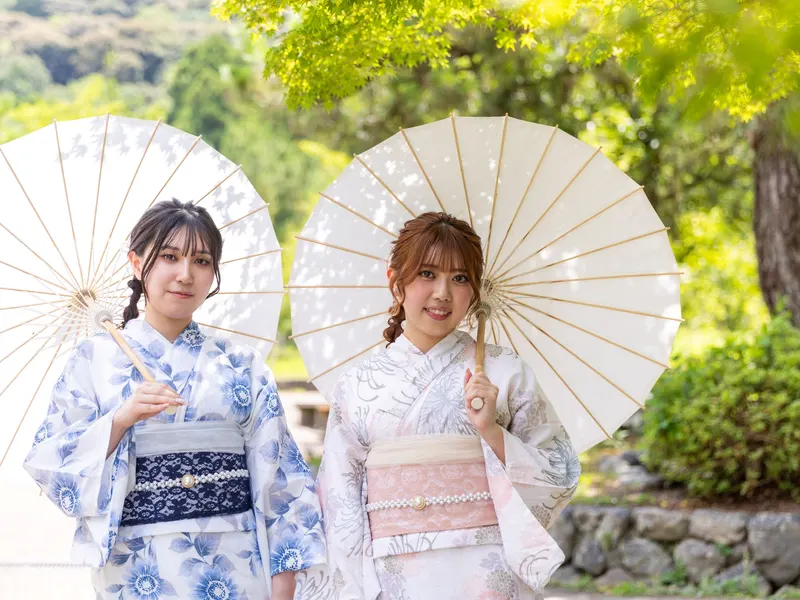
Book the morning slot, not the afternoon: the shops run out of the good sizes and patterns by midday in high season, and you want the light for photos in Higashiyama anyway. Easiest from a Downtown or Gion base. See kimono rental options on Klook →
A tea ceremony that is actually explained in English
The difference between a good tea ceremony and a disappointing one is entirely whether someone explains what is happening and why. Book an English-language session rather than walking into whatever is nearest. See tea ceremony experiences on Klook →
teamLab in Kyoto
Timed entry, and the good slots go first. A useful rainy-afternoon or evening answer when the temples have closed — most of Kyoto shuts at 16:30 or 17:00, which catches people out. Check teamLab Kyoto tickets on Klook →
An evening walk through Gion with a guide
Worth it mainly because a guide will keep you out of the private lanes where photography is banned and fines are real. If you are staying Downtown, this is a ten-minute walk from your hotel. See Gion walking tours on Klook →
🏠 The thing worth booking that costs nothing
An early alarm. Kiyomizudera opens at 6:00, Fushimi Inari never closes, and the difference between Higashiyama at 7am and Higashiyama at 11am is the difference between the Kyoto in the photographs and a queue. If you stay in Gion or Downtown you can be standing in an empty lane fifteen minutes after you wake up. That, far more than any ticket, is what you are buying when you choose your area.
Final Recommendation
Once you’ve picked your area, see what’s actually worth booking ahead: Best Klook Activities in Kyoto for First-Time Visitors.
- Default choice → Downtown (Kawaramachi–Karasuma). Evenings matter.
- Day-trip-heavy plan → Kyoto Station.
- One special night → Gion/Higashiyama or an Arashiyama ryokan, with the rest elsewhere.
Book months ahead for late March–early April (cherry blossoms) and November (autumn leaves) — Kyoto sells out earlier than anywhere else in Japan.
Next step: if you are still choosing between Kyoto and Osaka, read the Kansai base guide before booking: Where to Stay in Kansai →
Kyoto Accommodation FAQ
Which area is best for a first trip to Kyoto?
Downtown Kyoto, the Kawaramachi–Karasuma area, for most people. It is the only part of the city that is genuinely alive in the evening, it is walking distance from Gion and Nishiki Market, and it has both the Hankyu line to Osaka and the Karasuma subway to Kyoto Station.
Should I stay in Kyoto or in Osaka and day-trip?
Stay in Kyoto if you have two or more days there. Osaka is cheaper and livelier at night, and the trains between them take under 30 minutes, so it is a workable plan — but Kyoto’s best hours are before 9am and after 5pm, and those are exactly the hours a day-tripper misses.
How many nights do I need in Kyoto?
Two full days is the realistic minimum for a first visit, which means three nights. One night means seeing the inside of trains. Four or more lets you add Arashiyama and a Nara day trip without rushing.
Do I pay the Kyoto accommodation tax separately?
Yes, in almost every case. It is charged per person per night at the property, on top of your room rate, even if you prepaid the room online. It runs from ¥200 to ¥10,000 per person per night depending on the nightly rate, under the rates that took effect on 1 March 2026.
Is Gion worth the higher price?
For one or two nights, yes. For a whole trip, usually not. You are paying for early mornings and lantern-lit evenings on your doorstep; you are also paying for smaller rooms, fewer dinner options after 9pm, and a longer walk to a useful train.
Do I need a car in Kyoto?
No, and it is actively worse than not having one. Parking is expensive and scarce, the streets around the major sights are congested, and every route you want is served by rail or a 20-minute walk.
Is the Kyoto Station area boring?
It is a modern station district, not an atmospheric one, and it is quiet after about 9pm. What you get in return is the Haruka airport express, the Shinkansen, the JR Nara Line and the main bus terminal underneath your hotel. If your trip is built around day trips, that trade is worth making.
When do Kyoto hotels sell out?
Late March to early April for cherry blossom, and the whole of November for autumn colour. Both sell out earlier than anywhere else in Japan — six months ahead is normal, and the good Downtown and Gion properties go first. Also check Golden Week (roughly 29 April to 5 May) and the New Year period, when Japanese domestic travel fills whatever is left.
Planning your first Japan trip? Download the free Japan Starter Guide — a simple checklist covering what to book before you arrive, where to stay in Kansai, and what most first-time visitors get wrong.